


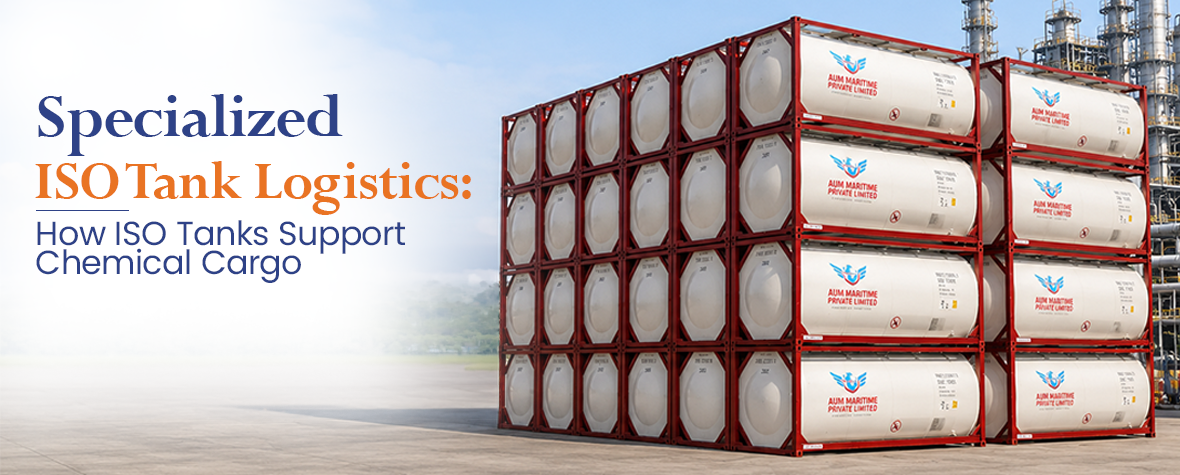
Transporting bulk liquid chemicals is much more than moving cargo from one location to another. It requires specialized equipment, careful planning, regulatory compliance, and coordinated handling to ensure safety, efficiency, and product integrity throughout the transportation journey.
ISO tanks offer a practical solution for transporting compatible bulk liquid cargo across road, rail, and sea. At Kalash Global Logistics (KGL), we support chemical manufacturers, traders, exporters, and importers with ISO tank logistics solutions, coordinating equipment requirements and transportation arrangements to facilitate efficient domestic and international bulk liquid movements.
Chemical Cargo: The Logistics Challenges Behind Every Shipment
Moving chemicals requires careful consideration of several factors, including the chemical's properties, classification, compatibility, loading requirements, documentation, route, port regulations, and handling procedures; each of these factors influences shipment planning and must be carefully assessed before transportation begins.
For chemical manufacturers, exporters and importers, even a small gap in coordination can result in loading delays, documentation issues, equipment rejection or additional operational costs.
1. Selecting a Tank That Is Actually Compatible With the Chemical
Although ISO tanks are widely used for transporting chemicals, selecting the right tank requires careful assessment of the chemical's classification, corrosiveness, concentration, temperature requirements and pressure specifications. Ensuring equipment compatibility is a fundamental step in planning any chemical shipment.
✓ How KGL Helps
KGL works closely with the shippers to obtain the necessary cargo specifications and identify the technical requirements for transportation. This helps ensure that the equipment arrangements are aligned with the cargo requirements and minimizes the risk of selecting unsuitable equipment.
2. Managing Documentation for Regulated Cargo
Chemical shipments, particularly regulated or hazardous cargo, require accurate documentation. Discrepancies between the product information, classification, packaging details, shipping instructions and supporting documents can create complications during cargo acceptance and transportation.
✓ How KGL Helps
KGL coordinates with shippers, carriers, terminals, customs authorities and other relevant stakeholders to ensure that shipment information and required documentation are properly aligned, helping minimize discrepancies and potential delays.
3. Avoiding Delays at Ports and Terminals
A chemical shipment may involve several parties—shipper, tank operator, transporter, freight forwarder, shipping line, terminal, customs, and port authorities. A delay in one part of this chain can affect the entire movement. Depending on the chemical's properties, certain shipments may require temperature monitoring or controlled conditions during transit. Timely coordination is therefore essential to maintain the required transportation conditions and avoid unnecessary delays.
✓ How KGL Helps
KGL manages communication and coordination between the different stakeholders involved in the shipment, including transportation and port-related requirements. Our team works to keep the movement synchronized across different stages, helping customers manage their shipments more efficiently from origin to destination.
4. Handling Different Loading and Discharge Requirements
Chemical products have specific requirements for loading, unloading, temperature control, pressure, connections and handling procedures. These requirements need to be understood before the tank reaches the loading or discharge location.
✓ How KGL Helps
KGL coordinates with shippers, tank operators, transporters and receiving facilities to understand the specific loading and discharge requirements, ensuring that equipment arrangements and transportation planning are aligned with the cargo's operational needs.
5. Managing Multimodal Movement Without Unnecessary Cargo Transfers
Chemical manufacturers often need to move cargo from a production facility to a port and then onward to an international destination. Transferring liquid cargo between different containers at every stage can introduce additional handling requirements, operational complexity and potential risks.
✓ How KGL Helps
T11 ISO tanks allow compatible liquid cargo to remain in the same tank throughout road, rail and sea transportation, subject to route availability, equipment suitability and applicable regulatory requirements. KGL can coordinate these different transportation legs as part of an integrated logistics movement, helping simplify multimodal transportation and reduce unnecessary cargo handling.
6. Maintaining Transparency Across a Complex Shipment
For chemical manufacturers, knowing the status of their shipment is important not only for customer commitments, but also for production planning, inventory management and receiving arrangements. A shipment may pass through multiple locations and involve several stakeholders before reaching its final destination.
✓ How KGL Helps
Our team facilitates shipment updates and communication between the relevant parties throughout the movement, helping customers maintain visibility across key stages of their ISO tank shipment.
Why T11 ISO Tanks Can Be Practical for Chemical Logistics
For compatible chemical products, T11 ISO tanks provide a standardized solution for bulk liquid transportation. Their ISO dimensions allow them to be handled through established intermodal infrastructure, while keeping the cargo in the same tank across different transportation modes.
For chemical shippers, this can help:
- Reduce unnecessary cargo transfers
- Simplify multimodal transportation
- Improve coordination across transportation stages
- Support international movement through standardized equipment
- Minimize additional handling points during transportation
However, T11 ISO tank suitability is always cargo-specific. The chemical's properties, tank specifications, compatibility requirements, and applicable dangerous goods regulations must all be evaluated before arranging the shipment.
Conclusion
Efficient chemical logistics requires the right transportation equipment. It depends on selecting compatible tanks, meeting regulatory requirements, coordinating multiple stakeholders, and managing every stage of the shipment with precision. T11 ISO tanks, when suitable for the cargo, offer a practical solution for transporting bulk liquid chemicals by road, rail and sea.
As an international logistics company in India, KGL brings together ISO tank logistics, freight forwarding and multimodal transportation coordination to support the diverse requirements of chemical manufacturers, exporters and importers. With a focus on operational excellence, transparency, and reliability, we help businesses streamline complex chemical shipments and manage their cargo movements from origin to destination.
Looking for Reliable ISO Tank Logistics Solutions?
Connect with Kalash Global Logistics to discuss your chemical cargo and bulk liquid transportation requirements.
Connect with Kalash Global Logistics